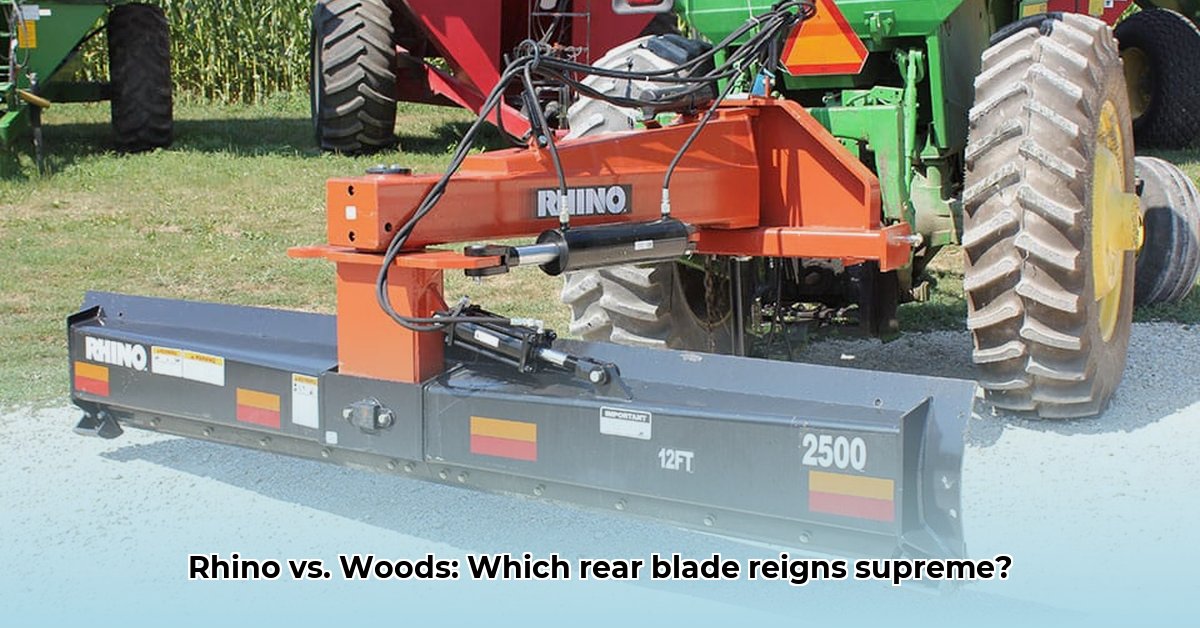
Choosing the right rear blade for your tractor is a critical decision impacting efficiency and longevity. This comparative review analyzes two leading brands: Rhino and Woods, highlighting their strengths and weaknesses to help you make an informed choice. We'll examine durability, specifications, key features, and provide a step-by-step guide to aid your decision-making process. For more resources, check out our detailed guide.
Durability and Construction: A Comparative Analysis
Rhino rear blades are renowned for their robust construction. They utilize reinforced frames, high-strength steel components, and precisely shaped cutting surfaces designed for longevity and reduced resistance. This translates to a longer lifespan and potentially lower maintenance. Their build prioritizes efficiency, easing the workload on both the operator and the tractor.
Information regarding the construction of Woods rear blades is less readily available. While promotional materials suggest durable designs, specific details on materials and construction techniques are lacking. A comprehensive comparison of durability remains impossible without detailed specifications from Woods regarding the steel grades, frame reinforcement, and manufacturing processes they employ.
Specifications: A Detailed Look
Rhino provides comprehensive specifications for their various models (850, 950, 1540, 2500, and 3500), including horsepower compatibility and offset capabilities. This transparency empowers informed decision-making, allowing users to select a blade perfectly matched to their tractor's capabilities.
In contrast, Woods lacks detailed specifications on their website and marketing materials. The absence of horsepower compatibility ratings and offset data hinders a direct comparison. This lack of transparency necessitates contacting Woods directly or visiting a local dealer to obtain the required information for a fair assessment.
Feature Comparison: A Closer Examination
The ideal rear blade depends on its intended applications. Key considerations include:
- Blade Width: Choose a width appropriate for your tractor's power and the scale of your project. Wider blades are suitable for large areas but may overtax smaller tractors.
- Adjustment Mechanisms: Hydraulic adjustments offer convenient angle modifications from the tractor seat, whereas manual adjustments necessitate physical intervention. Consider the frequency of angle adjustments when making your decision.
- Additional Features: Skid shoes protect the blade's underside, while gauge wheels ensure even land grading. These add-ons enhance performance and efficiency.
Rhino's product descriptions clearly list available features. Unfortunately, a similar level of detail is absent from Woods’ information. Their lack of readily accessible details on available features makes a complete feature-by-feature analysis currently impossible.
Head-to-Head Comparison: A Partial Overview
The table below summarizes available information. The limited data from Woods restricts the scope of this comparison.
| Feature | Rhino | Woods | Notes |
|---|---|---|---|
| Construction | Heavy-duty steel, reinforced design | Information not fully disclosed | Rhino's emphasis on robust design is evident. |
| Blade Shape | Precision-formed, optimized for efficiency | Details not provided | Rhino's design likely minimizes resistance and optimizes performance. |
| Tractor Horsepower Compatibility | Clearly specified for each model | Not specified | Crucial for matching the blade to your tractor's capabilities. |
| Adjustment Method | Varies by model (hydraulic and manual options) | Unknown | Further clarification on Woods' adjustment mechanisms is needed from the manufacturer. |
| Additional Features | Skid shoes, gauge wheels often included | Unknown | Woods' offerings require further investigation to accurately assess available additional features. |
Making the Decision: A Step-by-Step Guide
- Assess Your Needs: Define the primary applications (e.g., snow removal, land grading).
- Check Tractor Specifications: Verify PTO horsepower and other relevant tractor capabilities.
- Request Detailed Specifications: Contact Woods directly or visit a dealer to obtain comprehensive specifications for their models.
- Compare Features and Specifications: Evaluate the detailed data from both manufacturers, focusing on aspects like blade width, weight, materials, and adjustment mechanisms.
- Consider Long-Term Costs: Factor in maintenance and replacement part availability and costs.
- Prioritize Safety: Ensure the blade meets safety standards and is compatible with your tractor.
- Make Your Choice: Select the blade that best aligns with your needs, budget, and long-term expectations.
This comparative review aims to facilitate a well-informed decision. However, the lack of complete information from Woods limits the scope of a fully objective comparison. Contacting Woods for complete specifications is strongly recommended before making a final purchase. Remember to always prioritize safety and thorough research.